


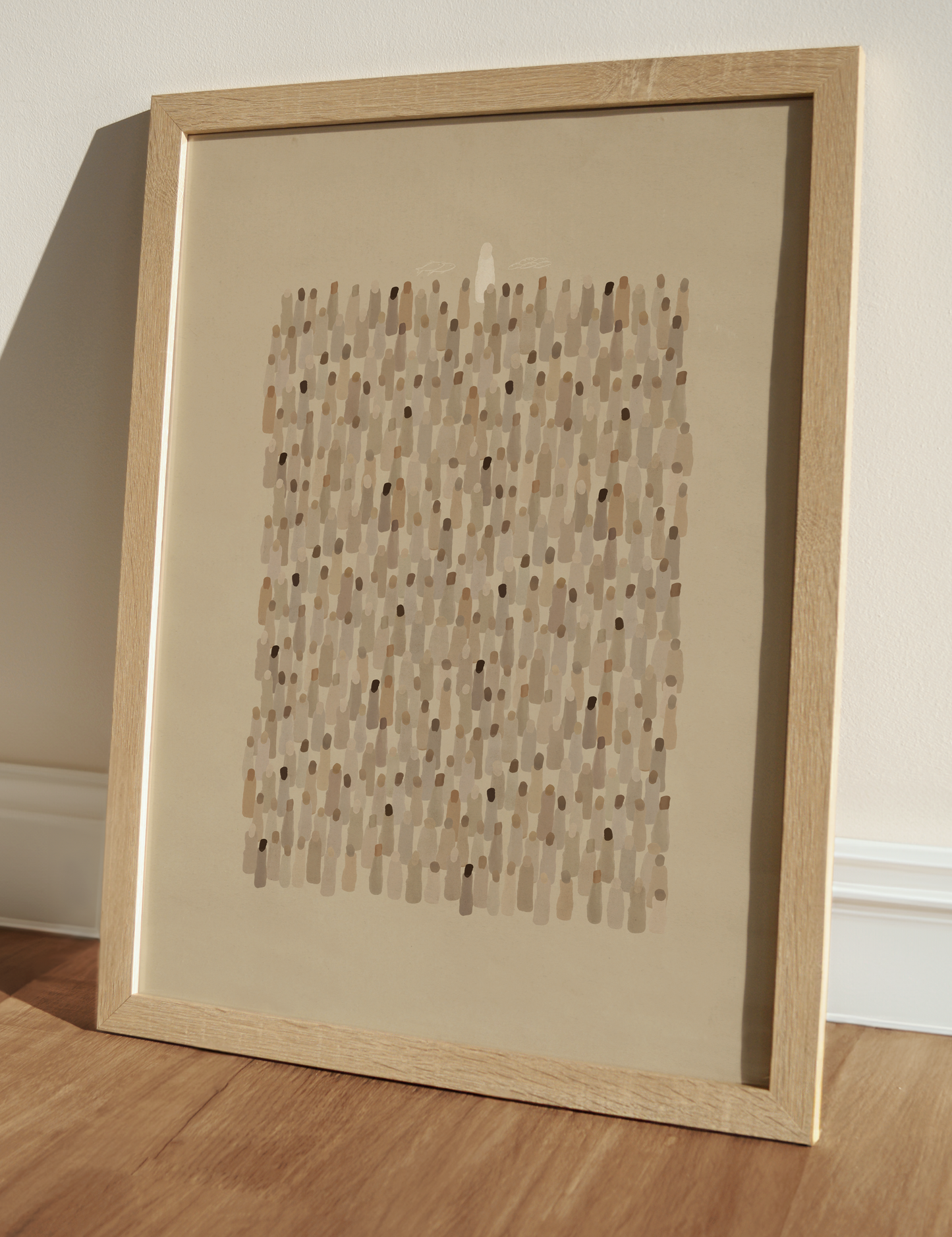
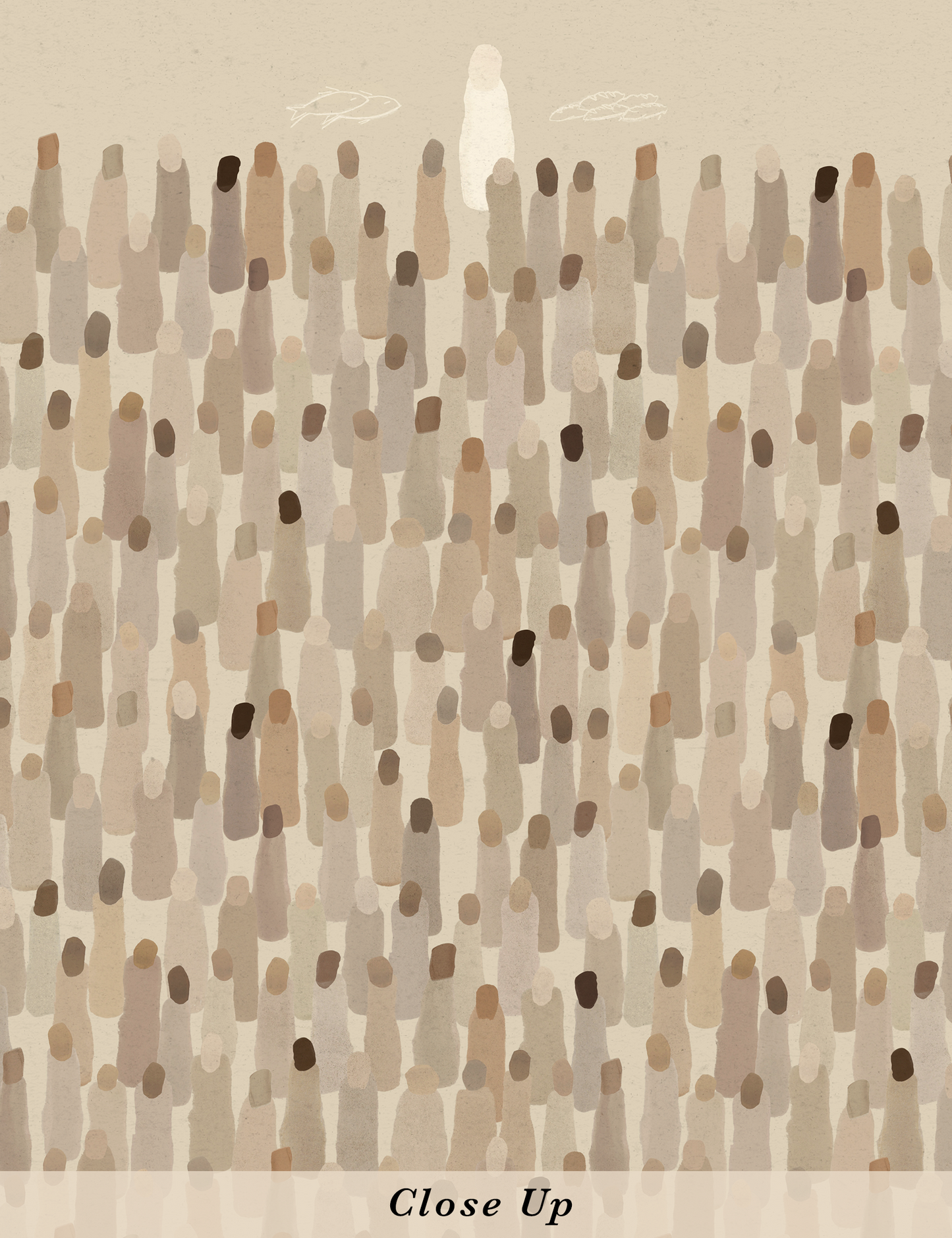
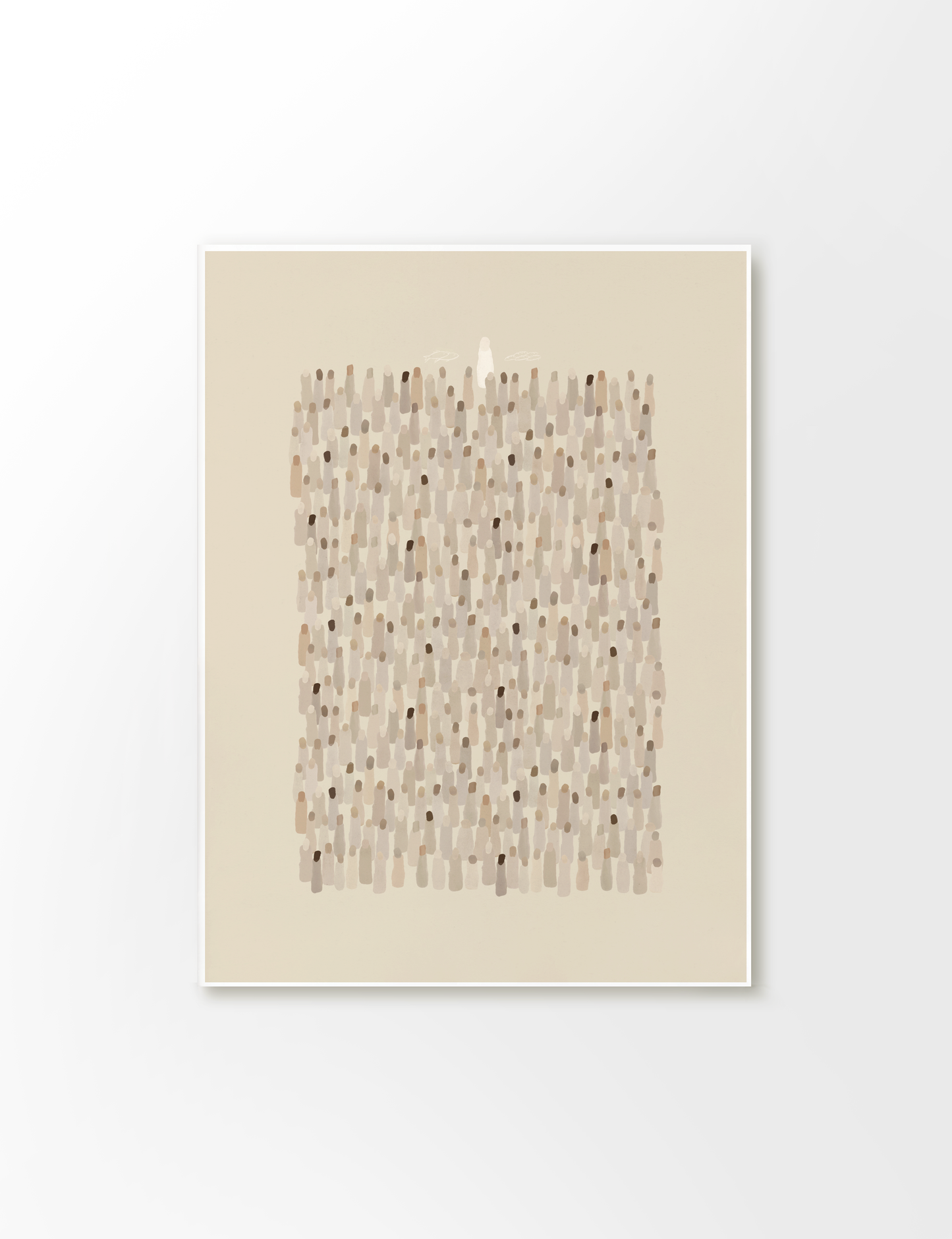
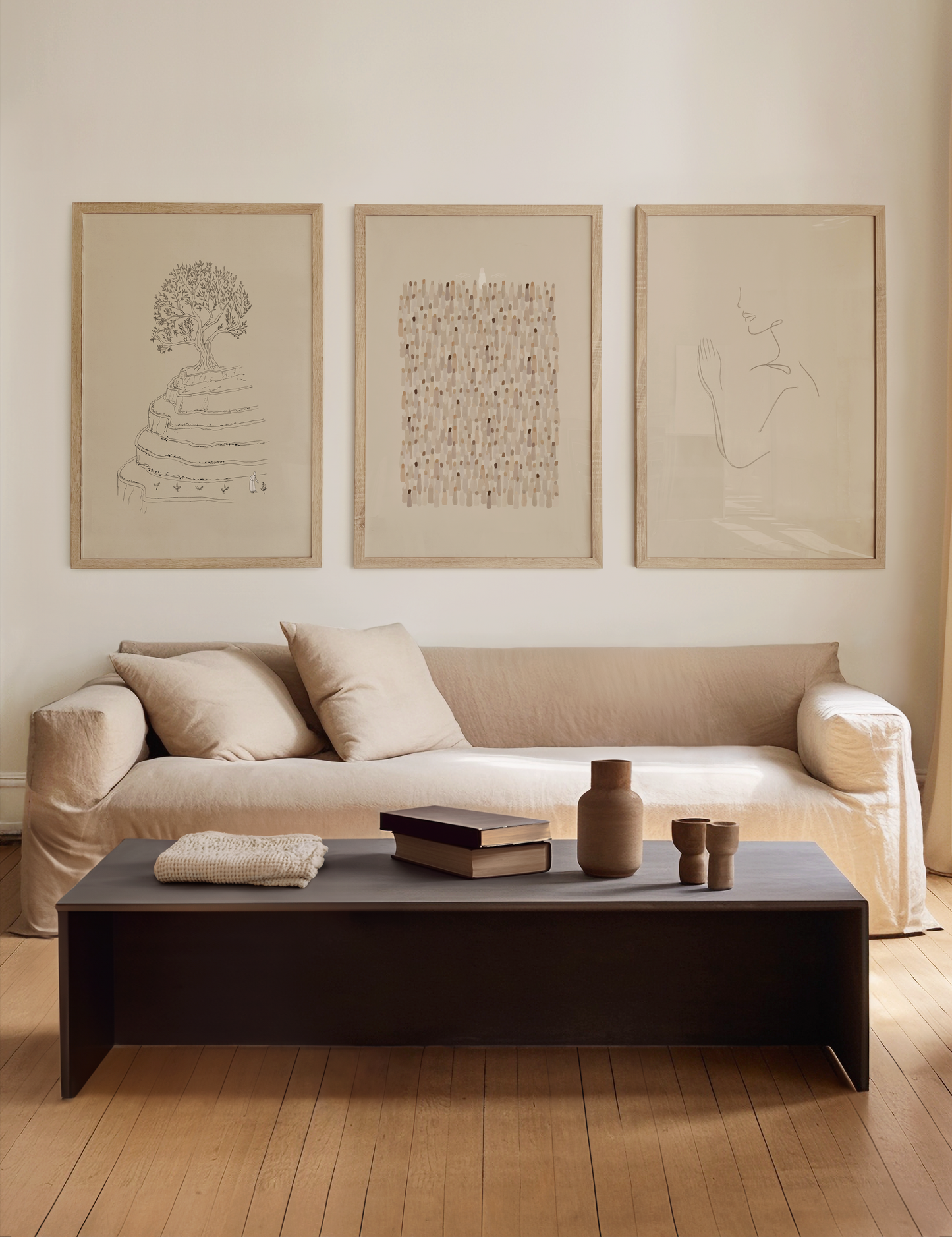
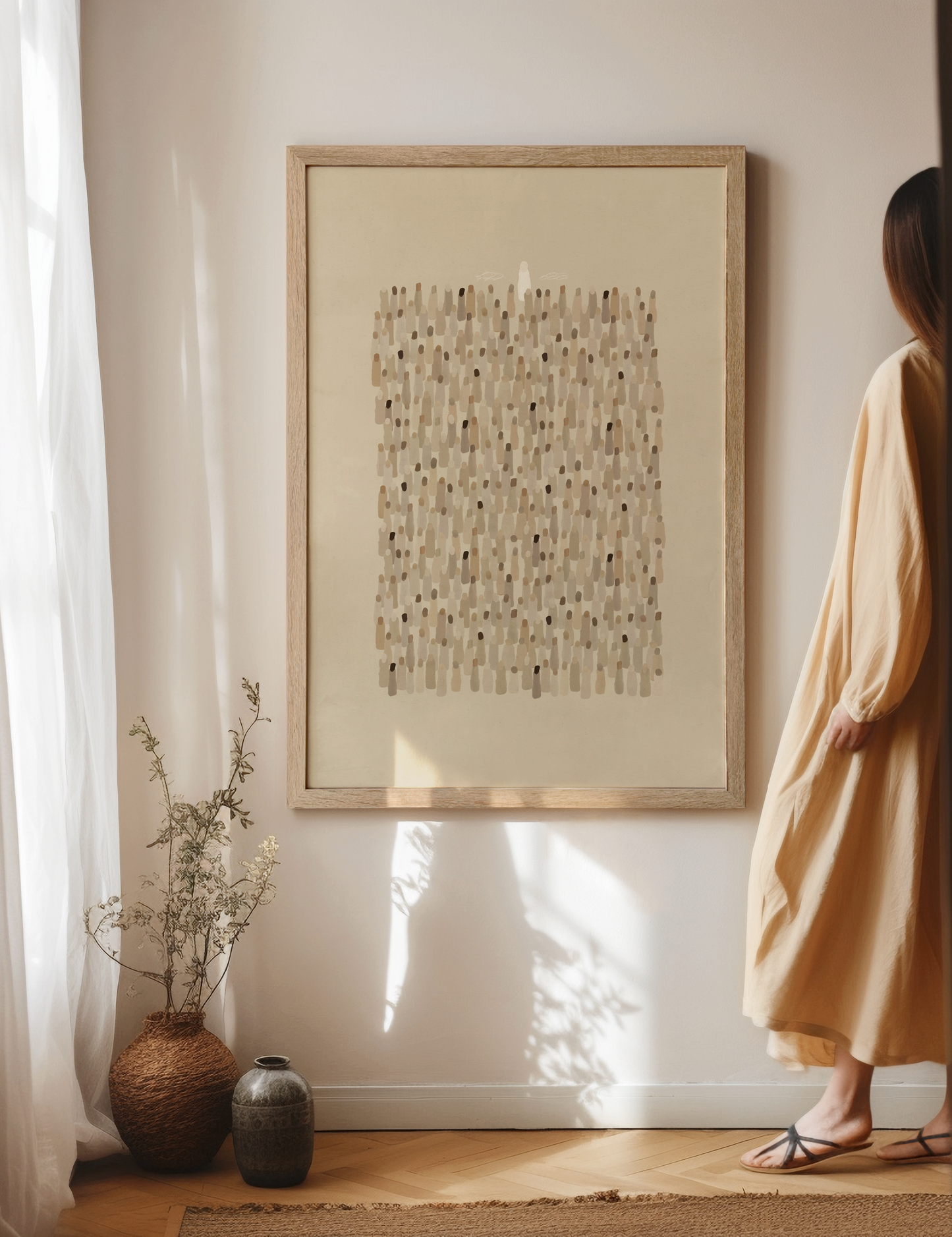
Jesus Feeds the 5000 framed fine art print in earth tones. A single figure of Christ rises above a gathered multitude, the crowd rendered in warm painterly brushstrokes. An earth palette of terracotta, ochre, taupe, and beige brings warmth to the miracle of abundance and provision.
"Taking the five loaves and the two fish, He gave thanks."—Matthew 14:19
✦ Black tones version here & White tones version here
✦ Ready to Hang with pre-installed hanging wire. The Unframed option ships rolled in a protective tube
✦ Materials: archival fine art paper, giclée pigment inks, acrylic protective screen, handcrafted wood frame
✦ Made in the USA 🇺🇸
Proudly handcrafted in our American art studio. Production time 2 business days.
✦ Easy Delivery
Free Shipping ✓ Protective Packaging ✓ 100% Insured ✓ Arrives in 3-4 business days after shipping ✓ Ships to All 50 States & Worldwide ✓ Zero Risk ✓
Art Details
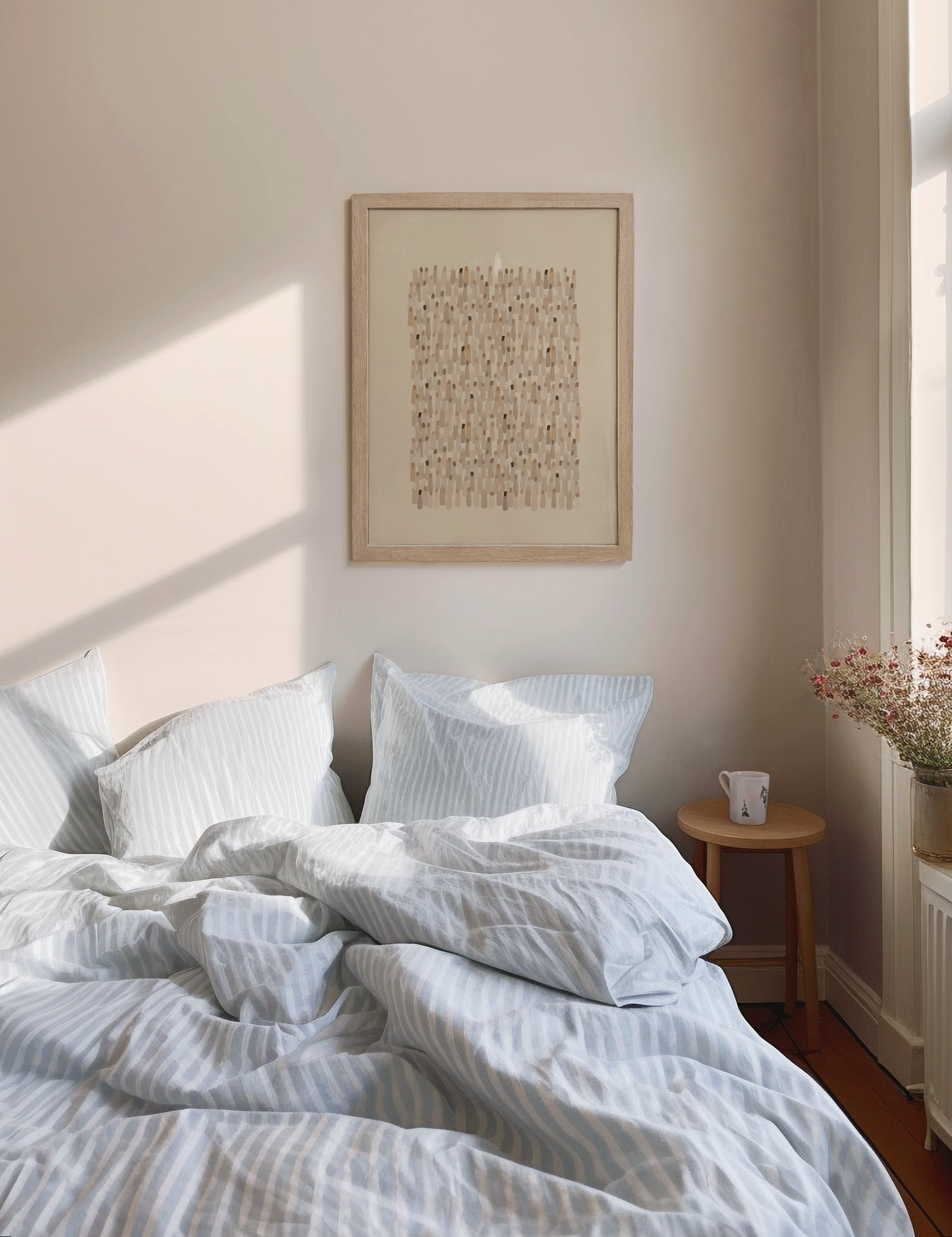
The warm, abundance-language version of the Feeding of the 5,000 collection. Jesus Feeds the 5000 — Earth Tones was made for the rooms where the table is set and the people are gathered, dining rooms, breakfast nooks, kitchen feature walls, family-meal walls, host and hostess gift settings, and warm-toned gallery walls, and pairs naturally with terracotta, ochre, taupe, warm beige, sand, desert tones, southwestern, Tuscan, Mediterranean, Provençal, and warm-traditional interiors. The earth-tone palette belongs to the warm-neutral decoration language that has carried strongly through 2025 and into 2026, and the painterly brushstroke crowd reads as a kind of abstract impressionism, generous, gathered, communal. It carries faith quietly but unmistakably and reads as art first and miracle second. This is the version most often hung as a grace-before-meals reminder above a family kitchen table, given as a dining room housewarming, and chosen as a gift for a family who gathers and hosts often.
- Subject: Jesus Feeds the 5,000, Matthew 14:13-21, the gathered multitude and the figure of Christ, the miracle of abundance and provision
- Style: painterly brushstroke crowd, warm-impressionist multitude, single figure of Christ rising above the crowd, modern abstract figurative
- Palette: terracotta, ochre, taupe, linen beige, warm earth tones
- Orientation: vertical
- Best for: dining rooms, breakfast nooks, kitchen feature walls, family-meal walls, host and hostess gift settings, warm-toned gallery walls
- Material: archival fine art paper, giclée pigment inks, acrylic protective screen
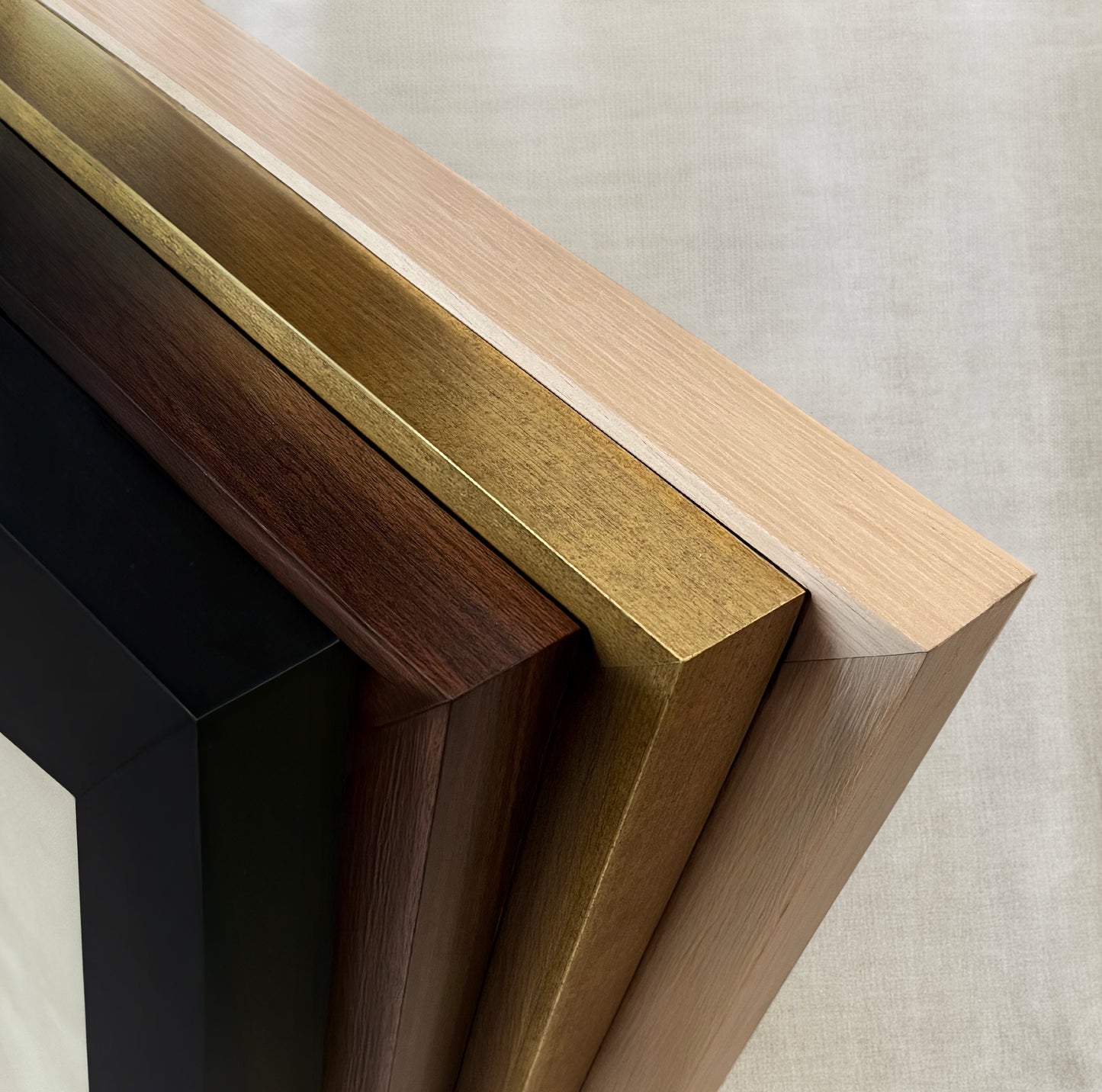
- Frame: handcrafted wood, 1-inch depth. The Unframed option ships rolled in a protective tube without acrylic.
-
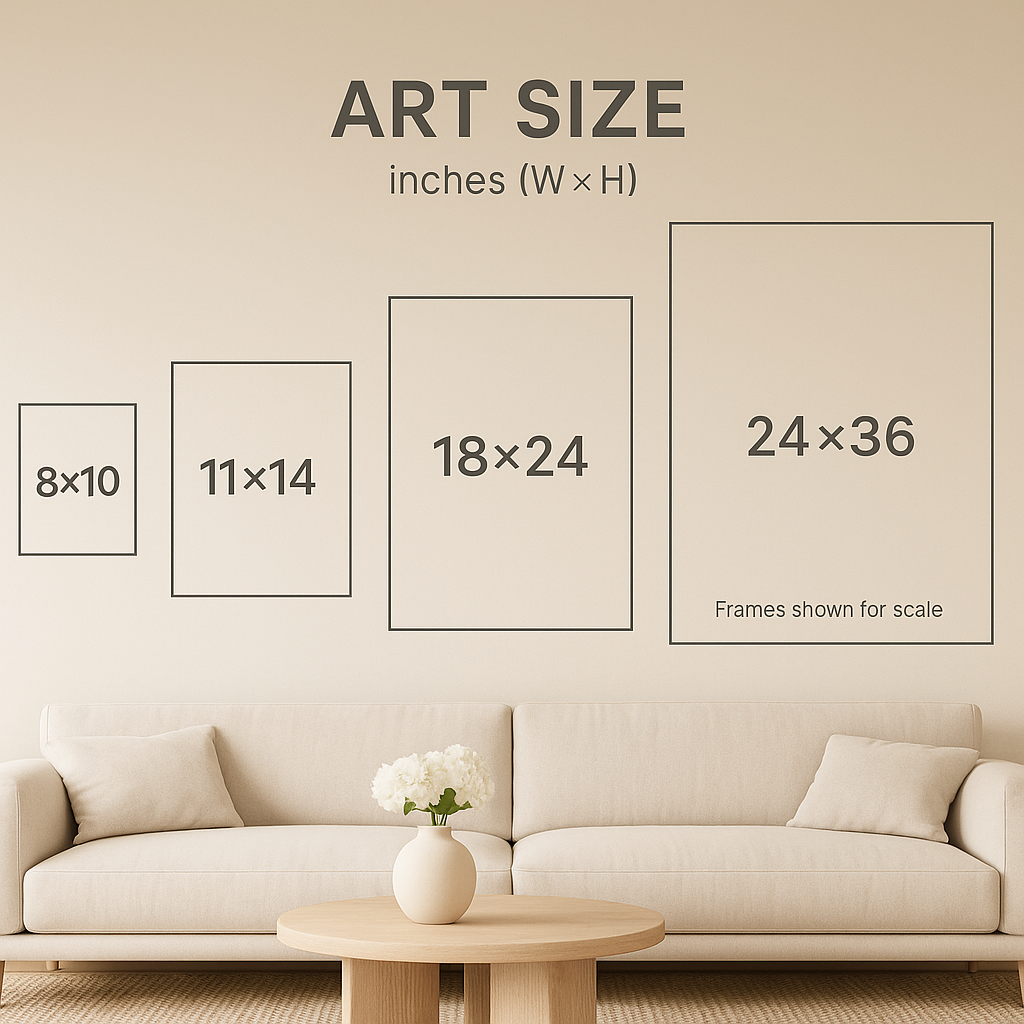
Sizes: 8×10, 11×14, 18×24, and 24×36 inches
Custom size? email us!
help@christianmodern.shop - Frame finishes: Light Wood, Brown Wood, Gold, Black, or Unframed
- Made in: Los Angeles, California, USA
- Includes: pre-installed hanging wire, arrives ready to hang out of the box
- Most-gifted occasions: dining room housewarming, host and hostess gift for a family of faith, grace-before-meals kitchen gift, parents' and grandparents' anniversary, retirement gift for a pastor or hospitality minister, ordination, wedding gift for a couple of faith, gifts for a family who hosts often
- Also available in: black line art and white line art
Shipping, Exchanges, Returns & Trust
- Free shipping across all 50 US states and worldwide
- Production time: 2 business days, then 3 to 4 business days delivery
- 100% insured with protective packaging
- Exchanges and returns: accepted within 30 days of delivery for your peace of mind
For support in the rare case of delivery damage, email help@christianmodern.shop.
About Matthew 14 & the 12 Baskets That Remained
The Feeding of the 5,000 is, after the Resurrection, the only miracle of Jesus recorded in all four Gospels, Matthew 14:13-21, Mark 6:30-44, Luke 9:10-17, and John 6:1-14. That alone marks its weight in the early church's understanding of who Jesus was. A great crowd had followed Jesus into a remote area near the Sea of Galilee. As evening came, the disciples urged Jesus to send the people away to find food. Jesus answered, "You give them something to eat." A boy in the crowd brought forward five barley loaves and two small fish. Jesus took the loaves, looked up to heaven, gave thanks, broke them, and distributed them through His disciples. Matthew 14:21 records that five thousand men were present, not counting women and children, which would put the actual crowd at fifteen to twenty thousand people. Everyone ate and was satisfied. And when the disciples gathered up what remained, they filled twelve baskets, one for each tribe of Israel, one for each disciple, an image of God's economy of grace in which the offering of the few becomes the abundance of the many and nothing is wasted. The warm earth-tone palette of this piece honors that abundance, the harvest tones of bread and field, of fish from the sea, of a hillside crowded with people who came hungry and went home full.
Jesus Feeds the 5,000 Common Questions
What does Matthew 14:19 mean and what is the Feeding of the 5,000?
Matthew 14:19 captures the moment of the miracle of the Feeding of the 5,000: "Taking the five loaves and the two fish and looking up to heaven, He gave thanks and broke the loaves." A great crowd had followed Jesus into a remote area near the Sea of Galilee. As evening came, the disciples urged Jesus to send the people away to find food, and Jesus answered, "You give them something to eat." A boy brought forward five barley loaves and two small fish, a child's lunch, and Jesus blessed them, broke them, and fed the entire multitude. Matthew 14:21 records that five thousand men were present, not counting women and children, which would put the actual crowd at fifteen to twenty thousand. After the people ate and were satisfied, twelve baskets of leftovers remained.
Why is the Feeding of the 5,000 the only miracle in all four Gospels besides the Resurrection?
Of all the miracles Jesus performed, only the Resurrection and the Feeding of the 5,000 are recorded in every Gospel, Matthew 14:13-21, Mark 6:30-44, Luke 9:10-17, and John 6:1-14. The early church and the Gospel writers clearly considered this miracle central to who Jesus is. Theologians point to several reasons: it shows Jesus as the new Moses, feeding His people in the wilderness as God sent manna; it shows divine compassion meeting human need; it shows the four-fold pattern (took, blessed, broke, gave) that would become the structure of every Christian Eucharist and communion meal; and it shows the economy of God in which a small offering, given with thanks, becomes more than enough for the multitude. The twelve baskets of leftovers, one for each tribe of Israel, one for each disciple, signal that this is not just lunch, this is the kingdom of God showing up at the table.
Which version should I choose, earth tones, black line art, or white line art?
All three are the same composition in three different treatments. Choose earth tones (this version) for a warm, painterly, abstract-impressionist look in terracotta and ochre, the version chosen most for dining rooms, kitchens, and warm-neutral homes. Choose black line art if the room leans modern minimalist, mid-century modern, contemporary, or dark academia, where crisp black linework reads as a bold graphic statement. Choose white line art if the room leans quiet luxury, linen, Scandinavian, or sacramental, or for a First Communion or Eucharistic gift, where soft ivory linework reads as ethereal and contemplative. The composition is identical; the treatment shifts the emotional register from warm and communal to graphic statement to quiet whisper.
Is the earth-tones Jesus Feeds the 5000 a good dining room, kitchen, or hostess gift?
Yes. Warm earth tones (terracotta, ochre, taupe, warm beige) are the dominant warm-neutral language for the spaces where families gather around a table, which is why the earth-tones treatment is the one chosen most for dining rooms and kitchens. It is given for dining room housewarmings, host and hostess gifts, parents' and grandparents' anniversaries, and as the small framed grace-before-meals reminder hung above a family kitchen table. The 11x14 framed size makes a thoughtful hostess gift; the 18x24 framed size works as the focal piece above a sideboard or in a breakfast nook; the 24x36 framed size makes a graceful statement above a large dining table.
Does the earth-tone palette fit a Tuscan, Mediterranean, or warm-neutral home?
Yes. Warm earth tones, terracotta, ochre, taupe, sand, warm beige, and desert palette, anchor Tuscan, Mediterranean, Provençal, southwestern, and warm-traditional decoration languages that have carried strongly through 2025 and into 2026. This piece pairs naturally with deep wood furniture, woven natural fibers, terracotta planters, brass and copper accents, and warm white walls. The painterly brushstroke crowd reads as warm impressionism, the kind of piece that gives a room presence without crowding it.
What size Jesus Feeds the 5000 print should I pick for a dining room?
For a dining room: the 8x10 fits a sideboard top, breakfast bar, or small gallery wall; the 11x14 works on a wall between two windows in a breakfast nook or above a small console; the 18x24 stands well as the room's main piece above a sideboard or buffet; the 24x36 makes a graceful statement above a six-seat or eight-seat dining table, hung roughly 6 to 10 inches above the back of the chairs. For a smaller breakfast nook, the 11x14 or 18x24 are usually the right scale; for a formal dining room with a large table, the 24x36 carries the room.
What kind of print is this and where is it made?
Each Jesus Feeds the 5000 — Earth Tones piece is a framed fine art paper print, produced on archival fine art paper with giclée pigment inks rated to last 100+ years away from direct sunlight, set behind an acrylic protective screen inside a handcrafted wood frame at 1-inch depth. Light Wood, Brown Wood, Black, and Gold frames are available, plus an Unframed option that ships rolled in a protective tube. Brown Wood and Gold frame finishes pair especially well with the warm earth-tone palette for a Tuscan or Mediterranean dining-room presentation. Every piece is handcrafted in our Los Angeles art studio with a production time of 2 business days, then 3 to 4 business days delivery.